
Come autumn, and my social media feeds would be full of images of raptors skimming over golden grasslands somewhere in Rajasthan. Harriers, Kestrels, Falcons and in between them the magnificent Indian Blackbucks. A little bit of research revealed that the mecca for these photos was a tiny town called Chhapar in Northern Rajasthan. Once a shooting reserve of the Bikaner Royal family, it was declared a protected area in the 1980s. In recent years, it has become very popular with birders who travel from all over India to these grasslands and adjoining areas to spot and photograph its resident wildlife and visitors who fly thousands of miles to enjoy the region’s bounties.
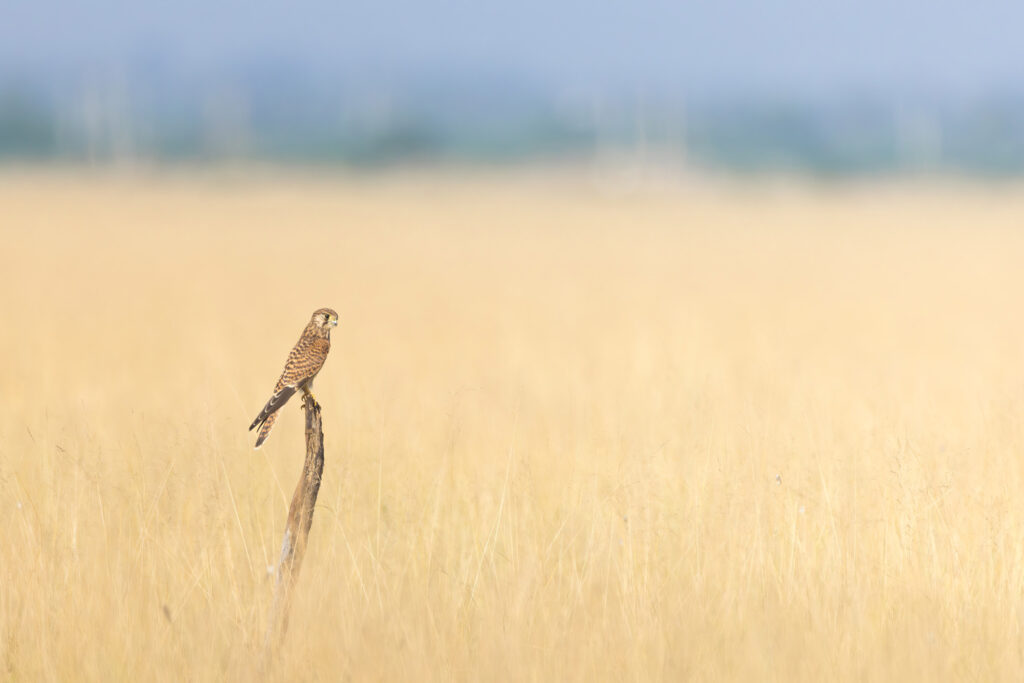
An overnight train deposited us at Chhapar Railway station, which is just a couple kilometres away from the sanctuary gates. We freshened up at our lovely little lodge, run by a local birder and entered the sanctuary at sunrise. Endless fields of gold stretched before us, and in the distance we could discern the shapes of birds of prey on their morning hunt. Dotted among the fields were poles and branches driven in to the ground, serving as perches. Every hundred meters or so, we would come across a raptor scouting for prey from their chosen perch.


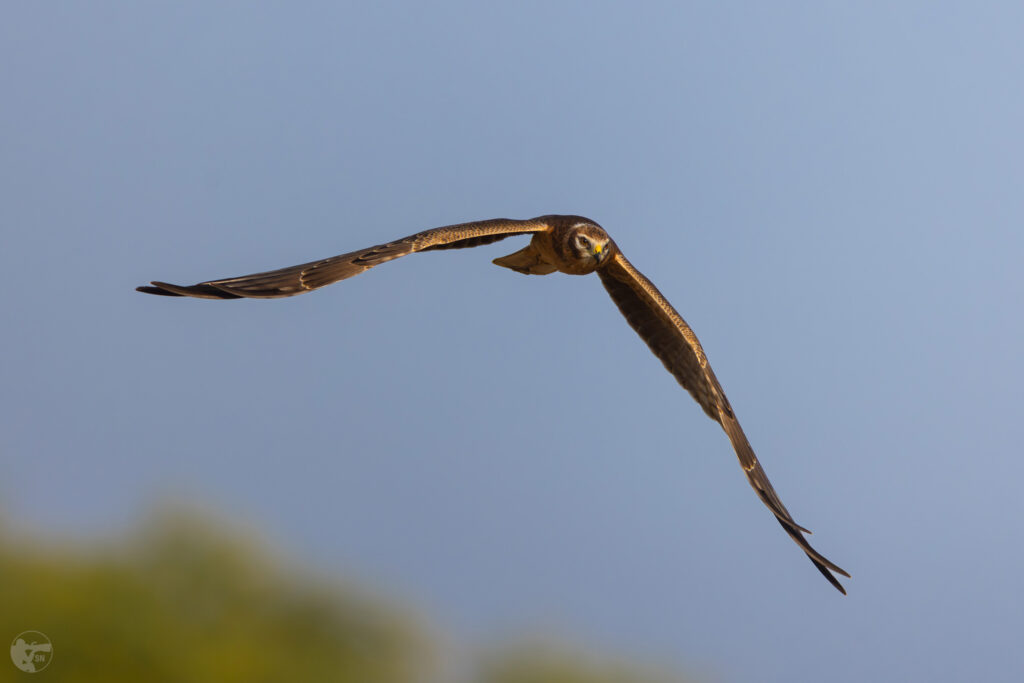
For me personally, this trip was all about Harriers. I had never had the opportunity to photograph them up and close in the past. And here, I was spoiled for choice. The grasslands are home to at least 3 species, the Eurasian Marsh Harrier (Circus aeruginosus), Montagu’s Harrier (Circus pygargus) and the Pallid Harrier (Circus macrourus). And there have even been reports of a Hen Harrier (Circus cyaneus) sighting.


The world ‘Tal’ in Hindi means a bowl like depression where water collects. In another time, rainwater would naturally flow into these grasslands and collect for the season. With human activity, only a trickle now flows in the monsoons, but it is still enough to create an abundance of insects and rodents, which is the primary reason for birds to flock here. Tal Chhapar serves as the perfect playground for young Harriers to hone their hunting skills and strengthen themselves for adult life.
Across the sunlit expanse of the grasslands, herds of blackbucks seemed to materialise from the shimmering horizon. In the golden afternoon light, young males locked horns in spirited bouts of headbutting and mock combat, testing strength and agility in lekking rituals as old as the plains themselves. Each clash sent up swirling clouds of amber dust that hung in the still air, turning the grassland into a glowing haze.


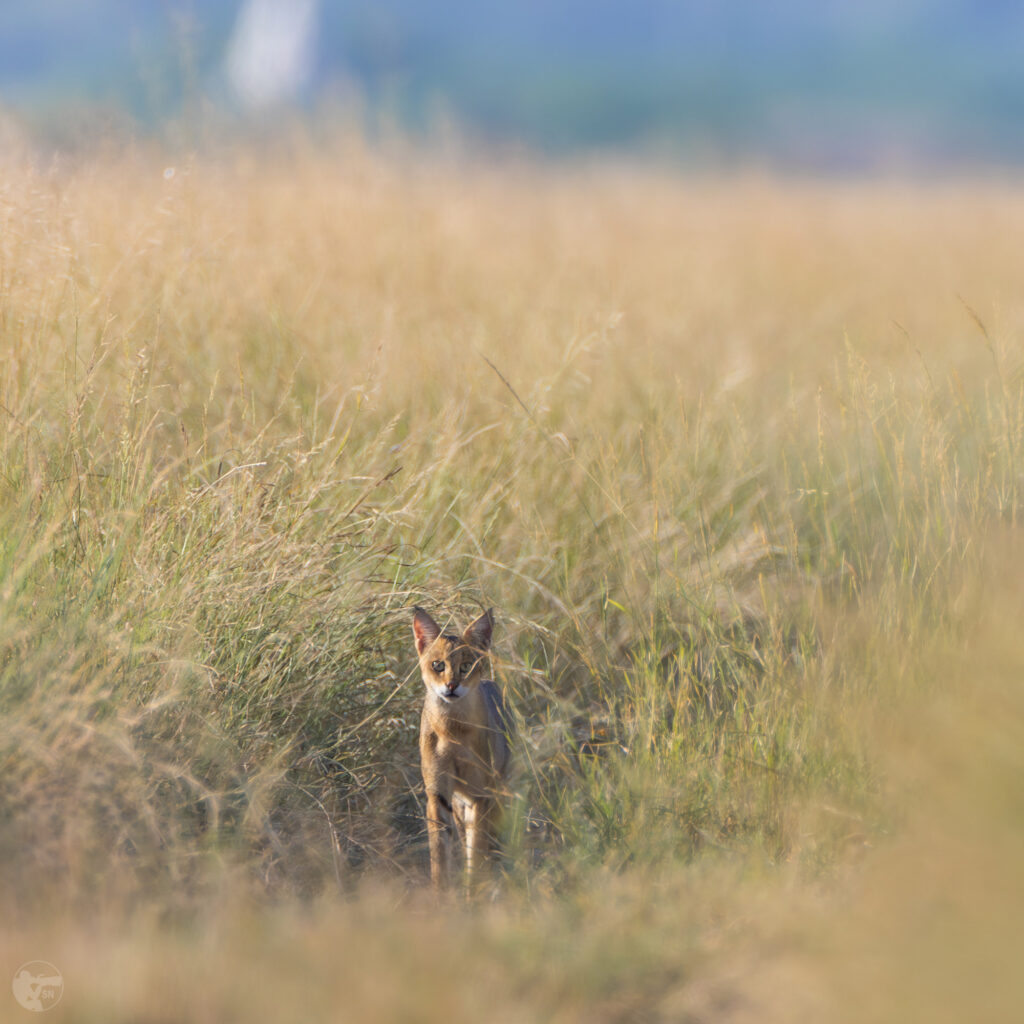
But the real surprise for us was the sighting of an Asiatic Wildcat, also known as the Desert Cat, a creature perfectly attuned to its surroundings that it seemed to dissolve into the tall, sun-bleached grass. True to its reputation, the shy feline kept a respectful distance, pausing only briefly before melting back into the grassland. While widespread – from the Caspian to Mongolia, its numbers are said to be dropping rapidly, due to habitat loss.
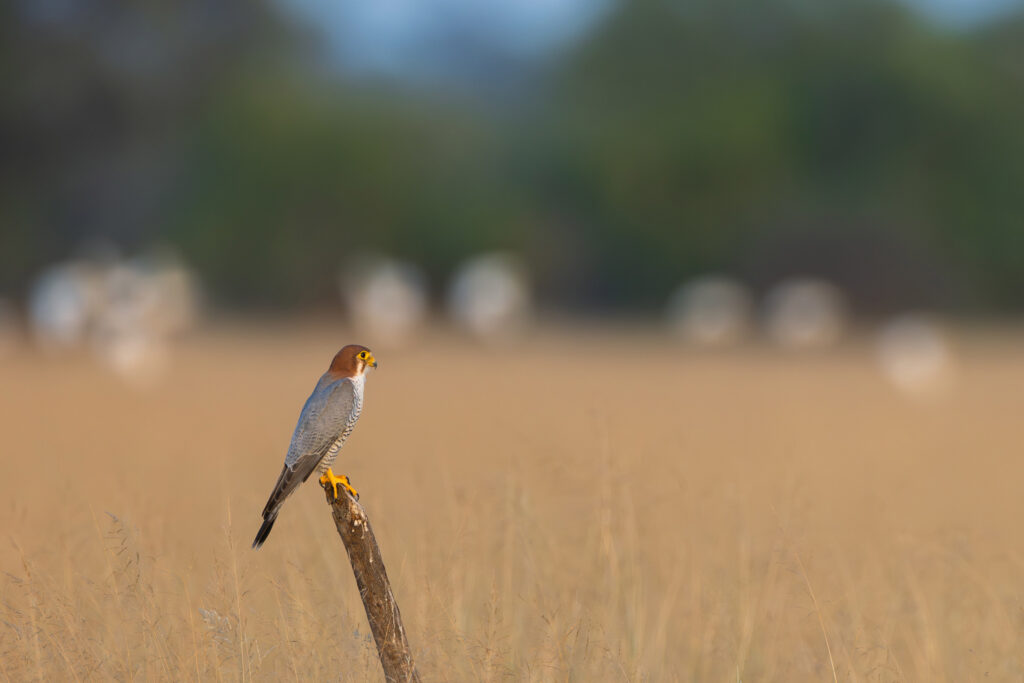
Perched prominently above the grassland, the Red-necked Falcon was undoubtedly the star attraction for the birders in our group. Calm, alert and every bit the consummate hunter, it surveyed the landscape with piercing focus, its gaze constantly searching for the slightest movement that might betray potential prey. Behind it, flocks of egrets drifted across the plains and settled in scattered groups, their white forms dotting the golden backdrop like tufts of cotton fluff. The contrast between the elegant predator and the serene pastoral scene around it made for a striking tableau, one that perfectly captured the richness and drama of Tal Chhapar’s grassland ecosystem.
As the day wore on, we realised that an overwhelming majority of the raptors we saw were juveniles and sub-adults. Mature adults were few and far between. This is perhaps testament to the region’s abundance of prey and the right ideal conditions that let these raptors thrive in such numbers. Harriers, buzzards, kites and even eagles in their first winter coats were seen aplenty. Here is an image of a juvenile White-eyed Buzzard approaching a perch in lovely light.
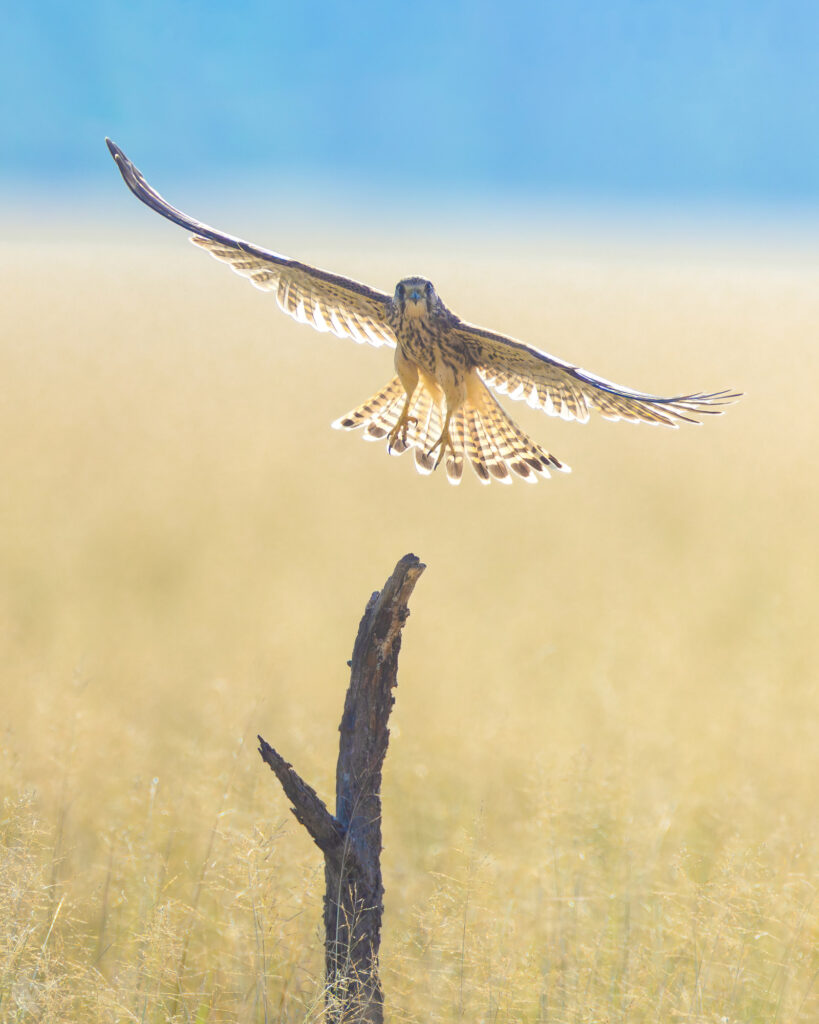
The sanctuary and surrounding grasslands are not the only habitat where raptors and mammals thrive. To the east of the Tal, lies a mix of scrub forest and wasteland. The grounds are largely managed by a Trust that manages a cattle shelter and for that reason, this patch is also known as Gaushala among locals. Dominated by khejri, kikar and babool trees along with patches of open grassland. The Gaushala area is frequented by gangs of male Blackbucks, probably trying to escape the crowds in the Tal itself and finding a quiet moment for themselves.


But the real reason why the Gaushala area is thronged by birders is the fact that is a happy hunting ground for raptors from far and wide. The scrubby terrain is prime habitat for the Indian Spiny Tailed Lizard (Saara hardwickii). In traditional Indian quackery, the se lizards are prized for their so called aphrodisiacal qualities and have been subject of illegal hunting for centuries. However, on the Gaushala grounds, they are protected – only from humans though. For the birds of prey, it is just open season.
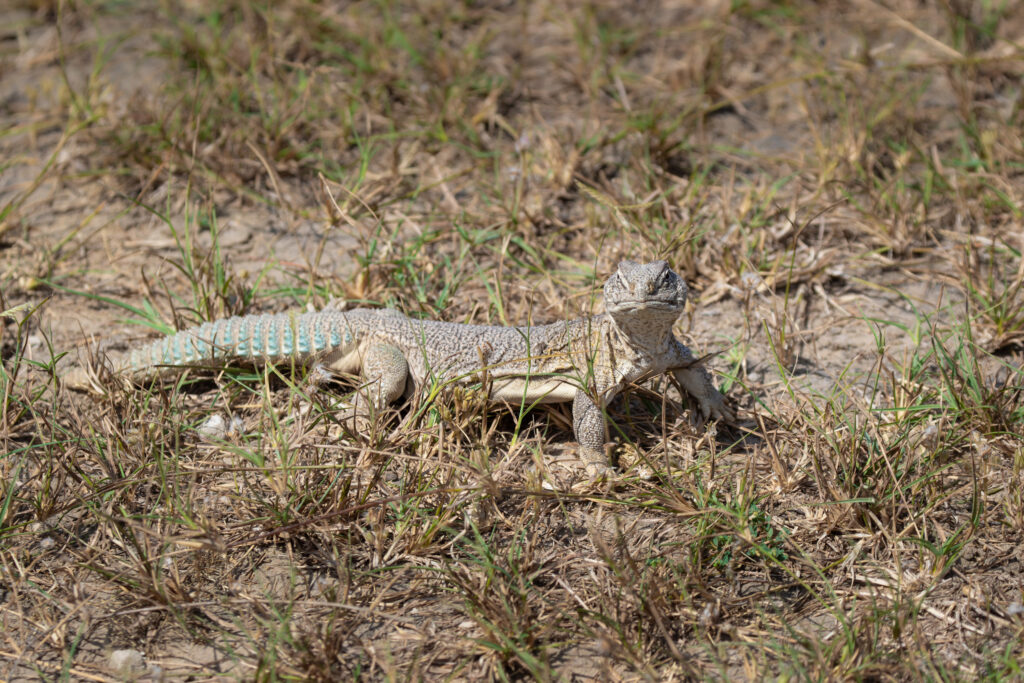
All one has to do is, keep track of a soaring eagle or a falcon in the sky. It won’t be long before one of them will dive straight for the ground and catch one. And soon enough, there’ll be a split open carcass being devoured on a nearby perch. In our time at the Gaushala grounds, we spotted plenty of Laggar Falcons (Falco jugger), Tawny Eagles (Aquila rapax), Booted Eagles (Hieraaetus pennatus) on the hunt. As winter approaches, one can even spot Imperial Eagles, Steppe Eagles and other migratory birds of prey coming from Central Asia and Far East.


All in all, a visit to Tal Chappar is highly recommended for birders and nature lovers. It is a unique habitat for these parts and there is far more to see than what is on this page. The best time to visit is from September to March, when migratory raptors arrive and wildlife activity is at its peak. Those coming from Delhi can take a train to Chapar or nearby Sujangarh. Otherwise, Chapar is easily accessible by road from Delhi, Bikaner and Jaipur. For our trip, we stayed at Laggar Nest Guest House. It is run by a veteran naturalist Ram Singh Ramu and his team. The guest house is homely, and the simple vegetarian food is perfect after long days in the field.
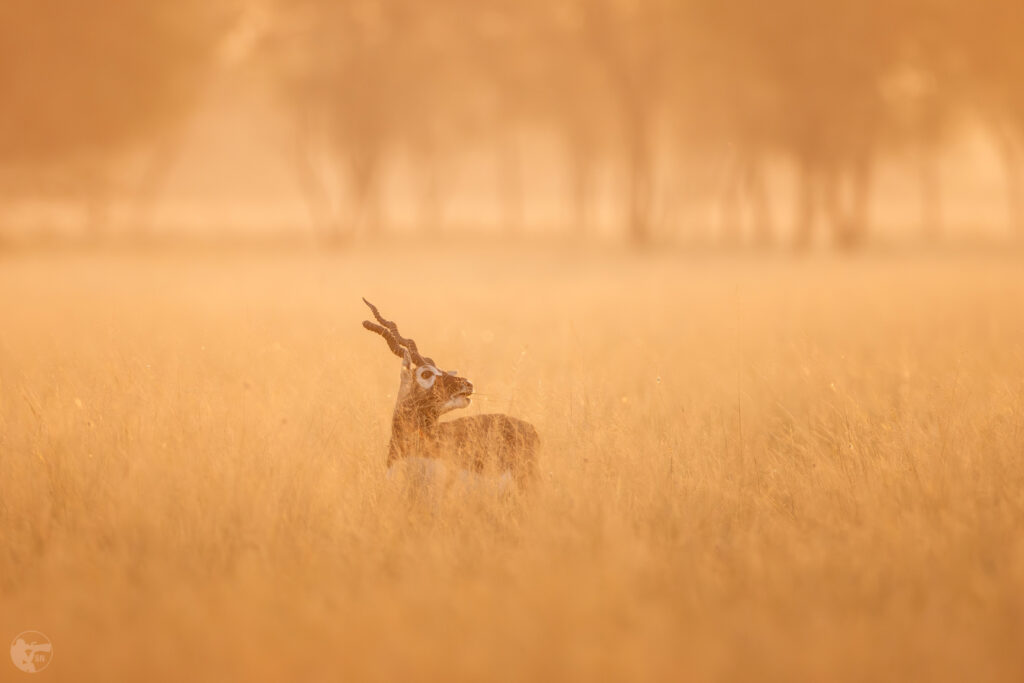
Tal Chhapar may not be as well known as some of India’s larger national parks, but that is precisely what makes it special. Its open grasslands offer some of the finest opportunities in the country to observe and photograph birds of prey, while also supporting an impressive variety of mammals and grassland wildlife. Whether you’re a serious birder, a wildlife photographer or simply someone who enjoys being outdoors, Tal Chhapar is a destination that deserves a place on your travel list.
I love Tal Chhapar – been on my list and i visit there everytime I visit India since 2022. I love the birds of Prey – never disappoints.